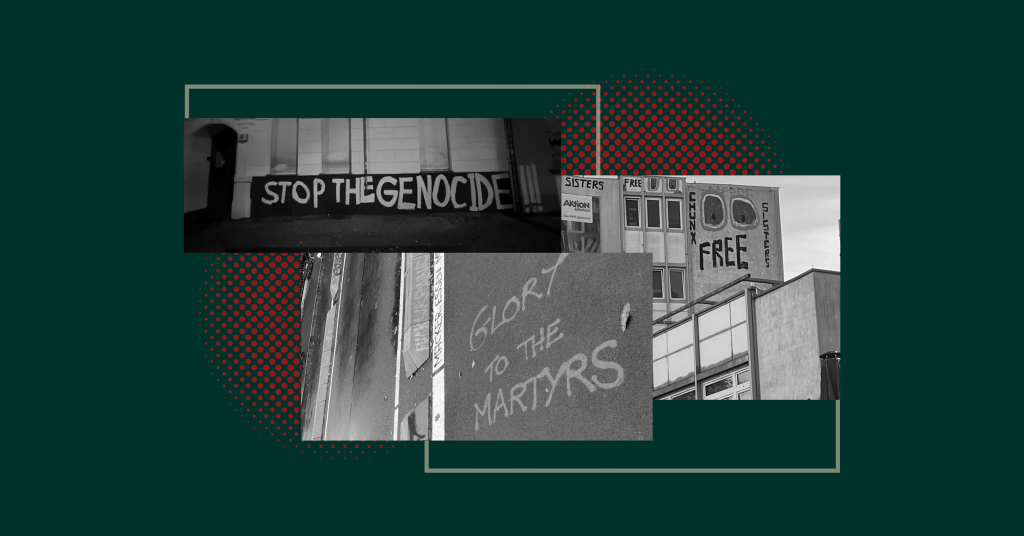
In Berlin, Palestinian street art reclaims public space and acts as a living archive. Researcher Hala R. delves deeper into her academic work, capturing resistance in real time.
Since the start of the Gaza genocide almost three years ago, many people took to the streets and expressed their anger through public spaces. Berlin was one of the cities which bore witness to revolutionary visuals and texts – particularly migrant-centered areas such as Neukölln.
The tradition of Palestinian street art as political resistance stretches back decades, rooted in the very conditions of occupation and siege that define Palestinian experience. Academic research reveals graffiti’s role as “a critical component of a complex and diffuse attempt to overthrow hierarchy; they were Palestinian voices, archival and interventionist” (Peteet, 1996, p. 140).
When Palestinian street art appeared on Berlin’s walls in late 2023, it wasn’t just graffiti — it was a refusal to accept silence taken out in visual form. The streets were not painted overnight – the social commentary on Palestine had already existed between spätis and underground stations – embedded into the Berlin urban fabric.
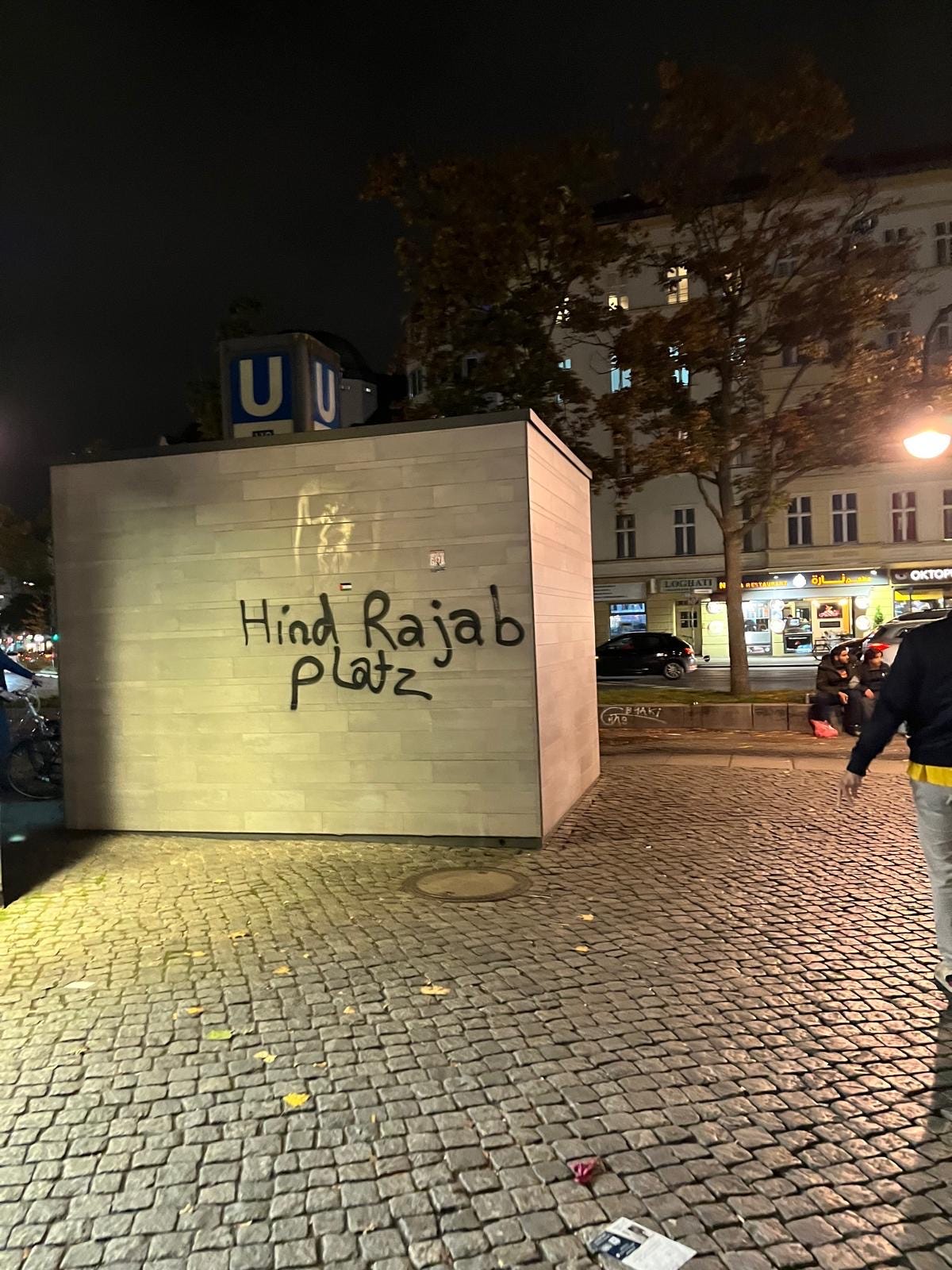
What once was the same space holding protests for Khalil Awadeh’s release in 2022, became the “Hind Rajab Platz”.
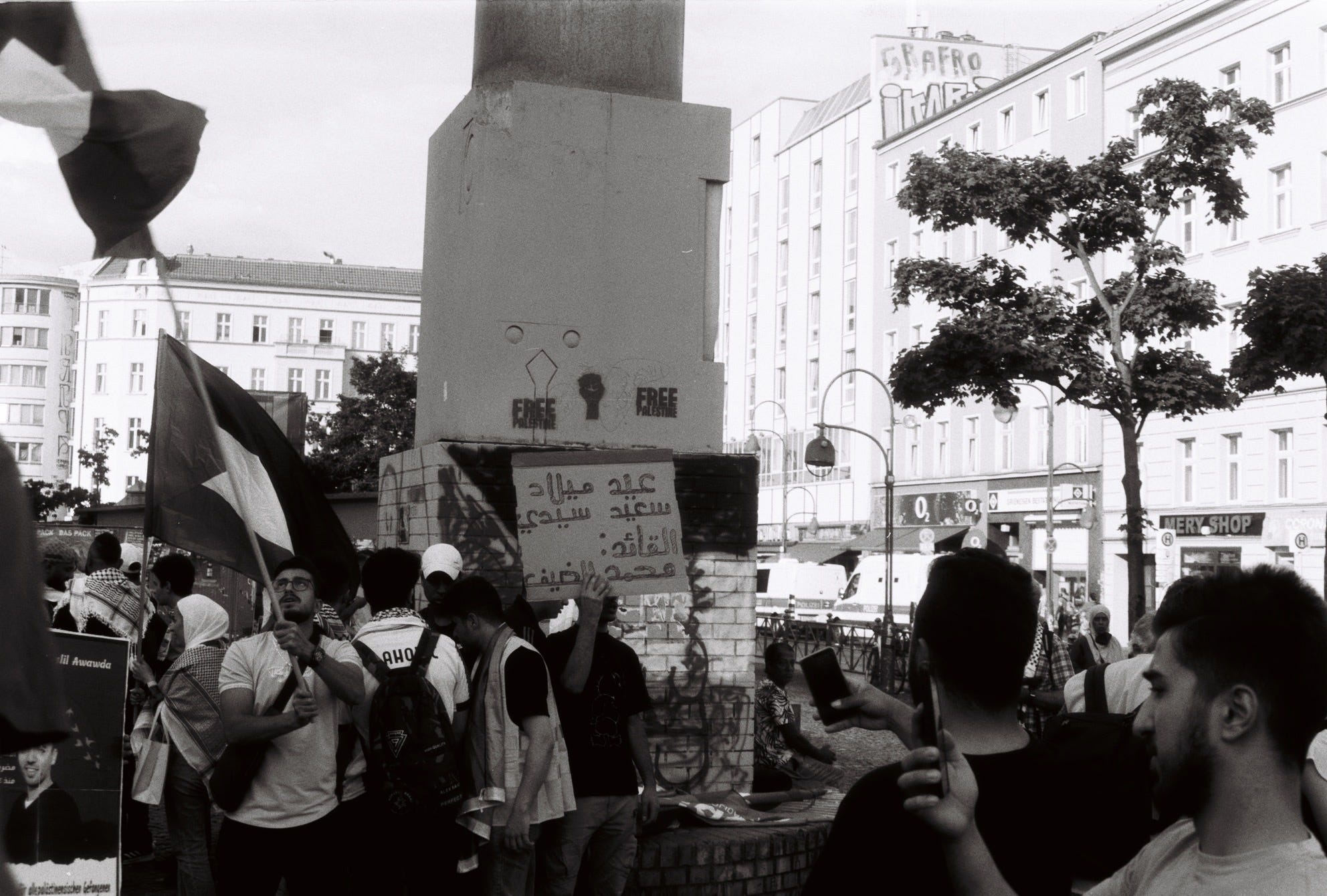
The visual landscape was changing daily, embodying the living struggle of Palestinian diaspora and their relationship with resistance, migration, and cultural memory in urban spaces where political narratives constantly collide.
Specialized in this academic discipline is PhD researcher Hala R. Based in Berlin, her current work focuses on documenting the Palestinian movement’s relationship with the city’s dynamic urban landscape.
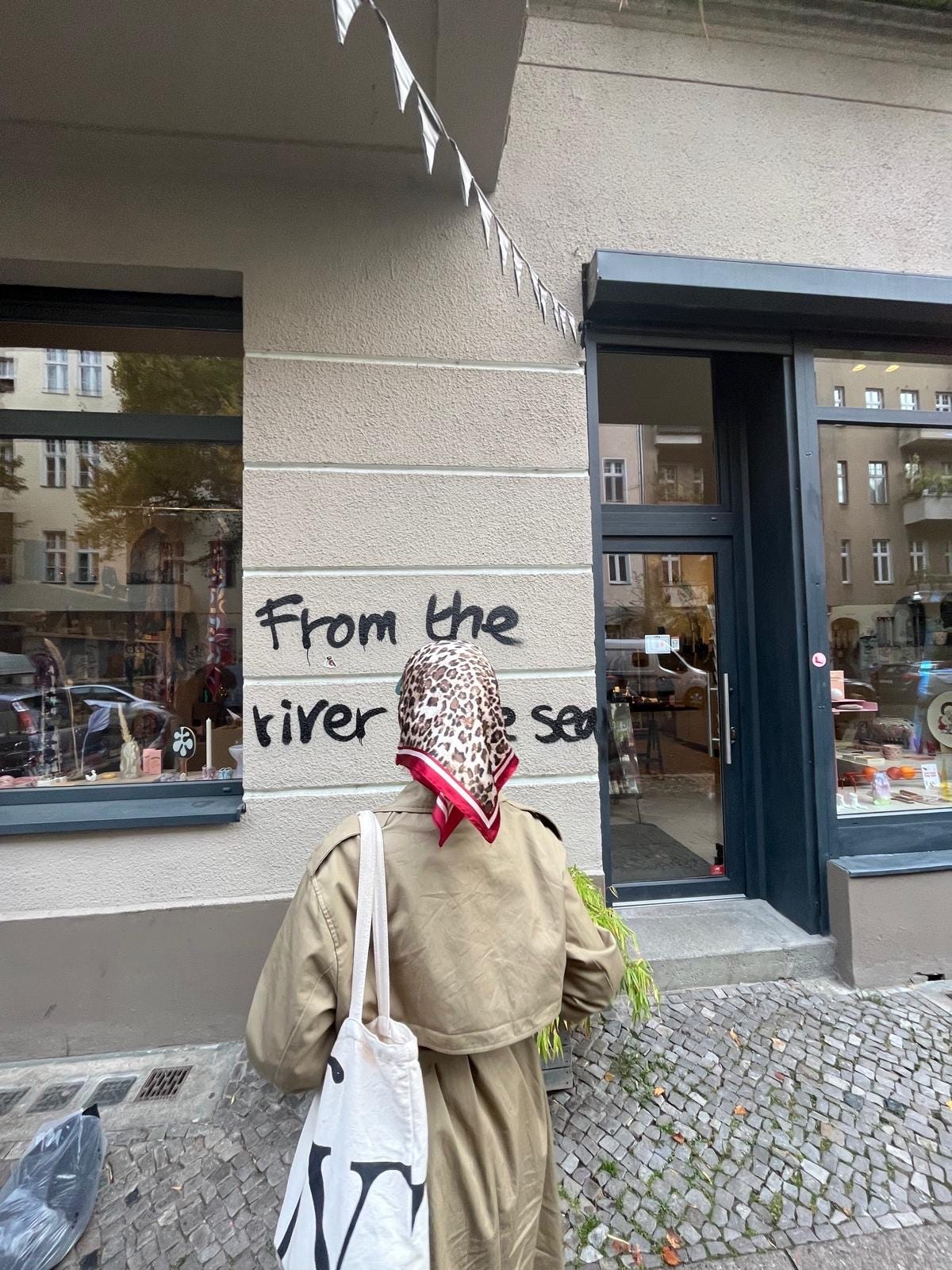
What was your main objective to starting this as your PhD topic/field of research?
My main objective in starting this research topic was to formally document and analyze a cultural and political reality that I have been witnessing, photographing, and living with in Berlin for years. As a Palestinian in the diaspora, I became increasingly aware that Palestinian street art in Berlin is not simply aesthetic expression. it is a form of cultural memory, resistance, and presence in a city where identity, migration, and political narratives constantly collide.
Since archiving in 2021, what has been the most interesting part of your study?
Since I began archiving Palestinian street art in 2021, the most interesting part of my study has been observing how rapidly the visual landscape shifts in response to political events especially in Berlin. Murals appear, disappear, get censored, get repainted, or evolve with new layers added on top. This constant transformation shows how public space becomes a living conversation between artists, authorities, communities, and the political climate.
Documenting this process taught me that street art is not static; it is a negotiation. The way certain Palestinian symbols are erased, while others persist or re-emerge, reveals who is allowed to express themselves in the city and who is not. These patterns of visibility and erasure have become one of the core analytical threads of my research.
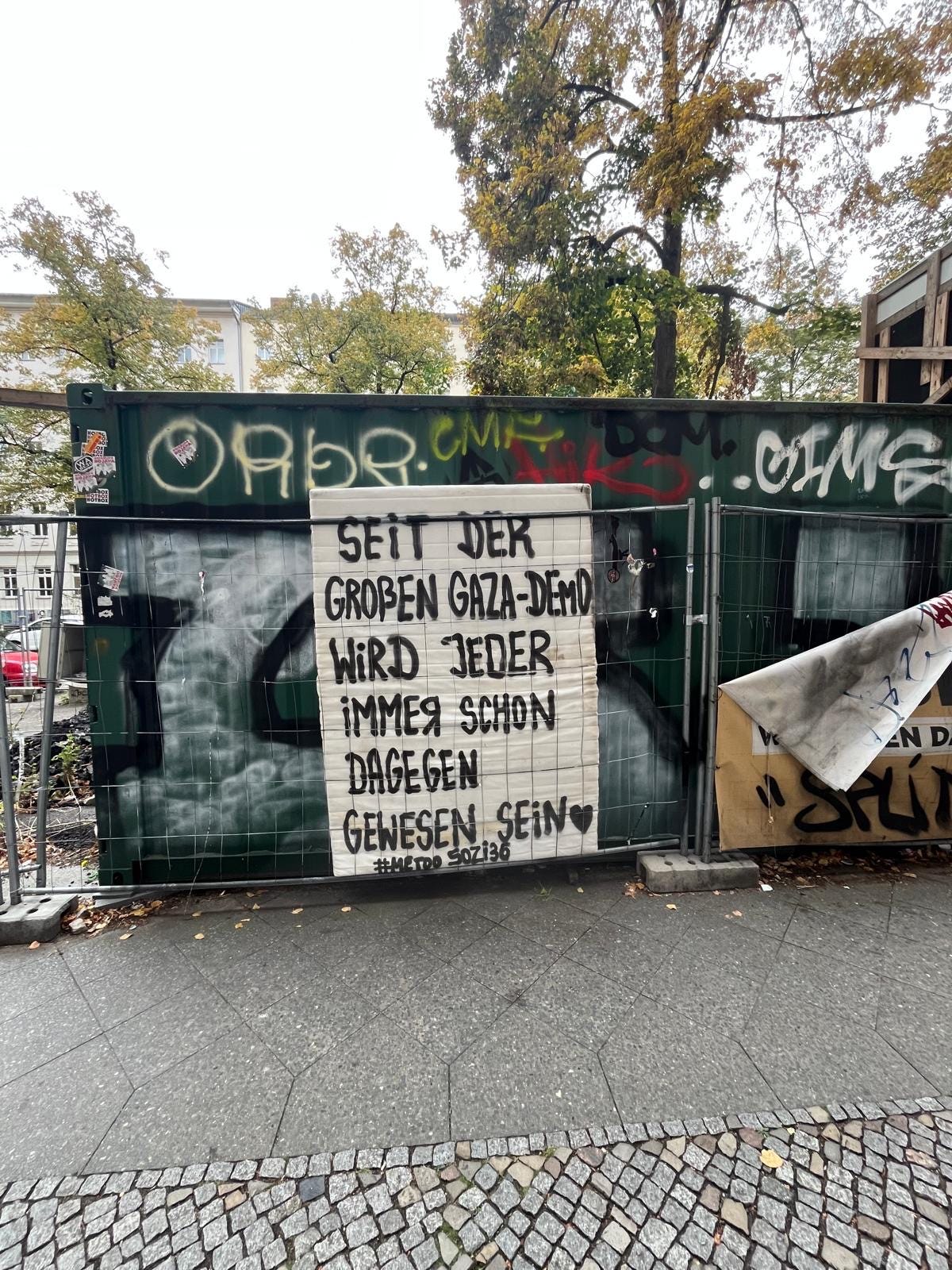
In Neukölln, how did you notice the change of street art since 2023?
Since 2023, I’ve observed a dramatic shift in Neukölln’s street art: what used to be scattered Palestinian symbols, small stencils, and occasional murals has turned into a constant, highly political visual landscape that changes almost daily. Large-scale pieces, layered posters, urgent messages, and new symbols began appearing overnight, while at the same time the rate of erasure intensified art that once stayed for weeks now disappears within hours, creating walls that cycle through repeated painting, censorship, and re-painting several times a week. The tone also changed from poetic imagery like watermelons, keys, or Kufiyye patterns to more direct statements, victim names, dates, and QR codes, often produced through collaborative or intersectional efforts with other marginalized communities. I also noticed the social reaction: people now stop to photograph, discuss, and argue in front of murals, turning these walls into active public forums. Overall, Neukölln’s street art shifted from symbolic and expressive to reactive, documentary, and collectively resistant.
Did more areas witness more street art after the repetitive censorship in Neukölln?
Yes. After the repeated censorship in Neukölln, Palestinian street art began appearing more widely across Berlin especially in Kreuzberg, Wedding, and parts of Friedrichshain. Artists seemed to respond strategically by spreading their work beyond Neukölln to avoid quick erasure, resulting in new stencils, posters, and murals across the city. In effect, the crackdown in one district led to a broader, more decentralized visual movement.
What does archiving and documenting as a practice mean to you?
Archiving and documenting, for me, is a way of protecting stories that are otherwise vulnerable to erasure. It means treating street art not just as something temporary on a wall, but as evidence of political expression, community memory, and lived experience. Especially as a Palestinian in Berlin, this practice allows me to capture what disappears overnight, to preserve visual narratives that are often censored, and to build a record that speaks when people or institutions try to silence it. Documenting is not passive! it’s an act of care, resistance, and responsibility toward the communities and histories that shape these images.
How do you perceive street art in the Palestinian movement?
I see street art as a powerful, accessible voice within the Palestinian movement, a way to claim visibility, resist erasure, and tell our stories in public without needing institutional approval. Through simple symbols and direct messages, it preserves memory, sparks solidarity, and keeps the Palestinian narrative present in everyday urban space.
What do you think the future of street art and grafitti will look like – particularly for Palestine and other Global South struggles?
I think the future of street art and graffiti, especially for Palestine and other Global South struggles, will become even more decentralized, digital, and harder to censor. As walls are increasingly painted over, artists will shift to multi-layered tactics: rapid stencils, mobile projections, QR-coded archives, and global online mapping of erased pieces. Street art will continue to move across cities and continents, creating transnational visual solidarity that bypasses institutions and borders. For marginalized movements, it will function less as decoration and more as witness documenting injustice in real time, reclaiming public space, and building a shared visual language of resistance that can survive both physical erasure and political pressure.
Hala’s area of research represents a crucial point in time where decolonial commentary meets grassroots documentation. As the spaces of Neukölln navigate the fine line between confrontation and preservation, disruptive forms of visual archival continue to play out their important role as urgent forms of communication.
منذ بداية الإبادة في غزة قبل ما يقارب ثلاثة أعوام، نزل العديد من الناس إلى الشوارع معبّرين عن غضبهم في الأماكن العامة. وكانت برلين من بين المدن التي شهدت بروز صوراً ونصوصاً ثوريه، لا سيما في المناطق التي يتمركز فيها المهاجروون مثل نويكولن.
يعود تاريخ فن الشارع الفلسطيني باعتباره شكلاً من أشكال المقاومة السياسية لعقود طويلة، متجذّرة في ظروف الاحتلال والحصار التي تشكّل جوهر التجربة الفلسطينية. وتشير الدراسات الأكاديمية إلى دور الغرافيتي بوصفه «عنصراً حاسماً في محاولة معقّدة ومتشعبة لتفكيك التسلسل الهرمي؛ حيث مثّلت هذه الأعمال أصواتاً فلسطينية ذات بعد توثيقي وتدخّلي» (Peteet، 1996، ص. 140).
وعندما ظهر فن الشارع الفلسطيني على جدران برلين في أواخر عام 2023، لم يكن مجرد رسومات جرافيتي، بل كان رفضًا للصمت تم التعبير عنه بصيغة بصرية. لم تُطْلَى هذه الجدران بين عشية وضحاها؛ فقد كانت التعليقات الاجتماعية حول فلسطين حاضرة بالفعل بين محال الـ«شبيتي» ومحطات مترو الأنفاق، متجذّرة في النسيج الحضري لبرلين.
المساحة ذاتها التي احتضنت احتجاجات للمطالبة بالإفراج عن خليل عواودة عام 2022، تحوّلت لاحقاً إلى ما يُعرف بـ«ساحة هند رجب».
كان المشهد البصري يتغير يومياً، مجسداً النضال الحي للشتات الفلسطيني وعلاقته بالمقاومة والهجرة والذاكرة الثقافية في الأماكن الحضرية حيث تتصادم الروايات السياسية باستمرار.
في هذا السياق، تعمل الباحثة في مرحلة الدكتوراه هلا ر.، المقيمة في برلين، على توثيق علاقة الحركة الفلسطينية بالمشهد الحضري الديناميكي في المدينة.
ما الهدف الرئيسي من اختيار هذا الموضوع لرسالة الدكتوراه في مجال البحث؟
كان هدفي الأساسي من بدء هذا الموضوع البحثي هو توثيق وتحليل واقع ثقافي وسياسي عايشته وراقبته وصوّرته لسنوات في برلين. وبصفتي كفلسطينية في الشتات، أدركت أن فن الشارع الفلسطيني في برلين ليس مجرد تعبير جمالي؛ بل هو شكل من أشكال الذاكرة الثقافية والمقاومة والحضور في مدينة تتقاطع فيها قضايا الهوية والهجرة والسرديات السياسية باستمرار.
منذ بدء الأرشفة لدى بحثك في 2021، ما أبرز ما لفت انتباهك؟
كان أكثر ما أثار اهتمامي هو سرعة تغيّر المشهد البصري استجابةً للأحداث السياسية، لا سيما في برلين. تظهر الجداريات وتختفي، تُمحى أو يُعاد رسمها، أو تتطور من خلال تراكم طبقات جديدة فوقها. هذا التحوّل المستمر يكشف كيف تتحوّل المساحات العامة إلى حوار حي بين الفنانين والسلطات والمجتمعات المحليه والمناخ السياسي.
وقد أظهرت عملية التوثيق أن فن الشارع ليس ثابتاً؛ بل هو مساحة للتفاوض. فأنماط المحو أو الاستمرار لبعض الرموز الفلسطينية تعكس من يُسمح له بالتعبير في المدينة ومن يُقصى، وهو ما أصبح محوراً تحليلياً أساسياً في بحثي.
كيف لاحظت التغير الذي طرأ على فن الشارع في نويكولن منذ 2023؟
منذ عام 2023، لاحظتُ تحولاً جذرياً في فن الشارع في نويكولن: فما كان في السابق رموزاً فلسطينية متناثرة، وقوالب رسومات صغيرة، وجداريات متفرقة، تحوّل إلى مشهد بصري مستمر وذو طابع سياسي قوي يتغير يومياً تقريباً. بدأت تظهر بين عشية وضحاها أعمال فنية ضخمة وملصقات متعددة الطبقات ورسائل عاجلة ورموز جديدة، وفي الوقت نفسه ازدادت وتيرة محو الأعمال الفنية التي كانت تبقى لأسابيع، لتختفي الآن في غضون ساعات، مما أدى إلى ظهور جدران تتكرر عليها عمليات الطلاء والرقابة وإعادة الطلاء عدة مرات في الأسبوع. كما تغيرت النبرة من الصور الشعرية مثل البطيخ والمفاتيح وأنماط الكوفية إلى تصريحات أكثر مباشرة وأسماء الضحايا والتواريخ ورموز الاستجابة السريعه والتي غالبًا ما يتم إنتاجها من خلال جهود تعاونية أو متقاطعة مع مجتمعات مهمشة أخرى. كما لاحظت رد الفعل الاجتماعي: فالناس الآن يتوقفون للتصوير والمناقشة والجدال أمام الجداريات، مما يحول هذه الجدران إلى منتديات عامة نشطة. بشكل عام، تحول فن الشارع في نويكولن من رمزي وتعبيري إلى تفاعلي وتوثيقي ومقاوم بشكل جماعي.
هل شهدت أحياء برلين الاخرى انتشاراً أكبر لفن الشارع بعد الرقابة المتكرره في نويكولن؟
نعم. بعد الرقابة المتكررة في نويكولن، بدأ فن الشارع الفلسطيني يظهر على نطاق أوسع في جميع أنحاء برلين، خاصة في كرويزبيرغ وفيدينغ وأجزاء من فريدريشسهاين. بدا أن الفنانين استجابوا بشكل استراتيجي من خلال نشر أعمالهم خارج نويكولن لتجنب محوها السريع، مما أدى إلى ظهور قوالب استنسل وملصقات وجداريات جديدة في جميع أنحاء المدينة. في الواقع، أدت الحملة القمعية في أحد الأحياء إلى حركة بصرية أوسع نطاقاً وأكثر لامركزية.
ماذا تعني لك ممارسة الأرشفة والتوثيق؟
تمثّلان الأرشفة والتوثيق، بالنسبة لي، حماية لقصص التي مهددة بالمحو لولا ذلك. وهذا يعني التعامل مع فن الشارع ليس فقط باعتباره شيئًا مؤقتًا على الجدران، بل كدليل على التعبير السياسي وذاكرة المجتمع والتجربة الحياتية. وبصفتي فلسطينية مقيمة في برلين، تتيح لي هذه الممارسة التقاط ما يختفي بين عشية وضحاها، والحفاظ على الروايات البصرية التي غالبًا ما تتعرض للرقابة، وبناء سجل يتحدث عندما يحاول أشخاص أو مؤسسات إسكاته. التوثيق ليس عملاً سلبياً! إنه عمل ينم عن الاهتمام والمقاومة والمسؤولية تجاه المجتمعات والتاريخ الذي يشكل هذه الصور.
كيف ترين دور فن الشارع في الحركة الفلسطينية؟
أرى فن الشارع كصوت قوي ومتاح للجميع ضمن الحركة الفلسطينية، وهو وسيلة لإبراز وجودنا ومقاومة محو هويتنا، ورواية قصصنا علنًا دون الحاجة إلى موافقة مؤسسية. ومن خلال الرموز البسيطة والرسائل المباشرة، يحافظ هذا الفن على الذاكرة، ويحفز التضامن، ويبقي الرواية الفلسطينية حاضرة في الفضاء الحضري اليومي.
كيف تتوقعين مستقبل فن الشارع، خصوصاً في قضايا الجنوب العالمي؟
أعتقد أن مستقبل فن الشارع والكتابة على الجدران، خاصة بالنسبة لفلسطين ونضالات الجنوب العالمي الأخرى، سيصبح أكثر لامركزية ورقمية وأصعب في الرقابة. مع تزايد طلاء الجدران، سيتحول الفنانون إلى تكتيكات متعددة الطبقات: قوالب رش سريعة، وعروض متحركة، وأرشيفات برموز QR، ورسم خرائط عالمية عبر الإنترنت للأعمال التي تم محوها. سيستمر فن الشارع في الانتقال عبر المدن والقارات، مما يخلق تضامنًا بصريًا عابرًا للحدود يتجاوز المؤسسات والحدود. بالنسبة للحركات المهمشة، سيكون دوره أقل كديكور وأكثر كشاهد يوثق الظلم في الوقت الفعلي، ويستعيد الفضاء العام، ويبني لغة بصرية مشتركة للمقاومة قادرة على الصمود أمام كل من المحو المادي والضغط السياسي.
يمثل مجال بحث هلا نقطة تحول حاسمة تلتقي فيها التحليلات المتعلقة بنزع الاستعمار مع التوثيق الشعبي. وفي الوقت الذي تتأرجح فيه مساحات نويكولن على الحافة الرفيعة الفاصلة بين المواجهة والحفاظ على التراث، تواصل أشكال الأرشفة البصرية غير التقليدية أداء دورها المهم باعتبارها وسائل اتصال ملحة.
 The MENA Archival lab